
What Makes Paid Media Feel Luxury Instead of Promotional?
Luxury paid media fails the moment it starts to look like an advertisement. The gap between a campaign that reads as promotional and one that reads as considered is rarely about budget. It is about four decisions made long before a media plan is approved: creative, audience, landing pages and offers. Get those four right and paid media behaves like a private introduction rather than a sales pitch.
Most senior marketers in premium hospitality, fashion, jewellery, automotive and travel already sense this tension. Performance teams want measurable clicks and conversions. Brand teams want restraint, mood and distance from anything that resembles a deal. The two agendas are usually run by different people using different logic, and paid media becomes the battleground where brand equity quietly erodes in the name of a lower cost per acquisition.
This piece sets out a practical way to resolve that tension. It walks through the four levers that separate luxury paid media from promotional paid media, applies a precise academic framework to explain why they work, and shows how three brands across hospitality, watchmaking and wine put the theory into practice. It closes with a four-step model any hotel or premium brand marketer can apply to their next campaign.

First-Party Data Makes Luxury Paid Media More Precise
The strongest luxury campaigns do not treat every audience member equally.
First-party data allows brands to distinguish between:
- Existing customers
- Recent enquirers
- High-value customers
- Lapsed customers
- Product-specific prospects
- Event attendees
This makes paid media more relevant without requiring broader targeting.
The objective is not simply to build a larger audience.
It is to build a more informed one.
Better audience intelligence creates better media efficiency without forcing luxury brands to compete on price.
The Point of View
Paid media only feels luxury when it behaves like the brand’s existing distribution channels, not like a separate, cheaper version of them. A campaign that would embarrass a boutique host or a hotel’s front-of-house team if it appeared on their desk has already failed, regardless of its click-through rate. The four controllable inputs are creative, audience, landing pages and offers, and each one carries brand risk independently of the others.

The Framework: Prestige Value, Not Conspicuous Consumption
Rather than defaulting to consumption theory, it is more useful here to apply Vigneron and Johnson’s prestige-seeking consumer behaviour model, first published in the Journal of Brand Management in 1999 and still one of the more precise academic tools for luxury marketing. The model identifies five value dimensions buyers assign to luxury goods: perceived conspicuousness, uniqueness, social value, quality, and hedonic or emotional value.
Applied to paid media, each campaign lever maps to one or more of these dimensions. Creative carries hedonic and quality value. Audience selection carries uniqueness and social value, since who else sees the ad matters as much as who converts from it. Offers carry conspicuousness risk, because a visible discount damages the perceived exclusivity the buyer is paying for. Landing pages carry quality value, because a rushed or generic page undoes the work the creative just did. The model gives marketing directors a shared vocabulary for a conversation that is usually argued on instinct alone.
- Creative: Restraint Reads as Confidence
Promotional creative shouts. Luxury creative assumes the viewer already wants to be there and simply proves the brand is worth the attention. That means longer edits, less on-screen text, and craft or provenance shown rather than described.
– Favour cinematic pacing over rapid cuts built for retention metrics
– Show process, materials or setting before showing the product itself
– Keep on-screen copy to a single idea per frame, not a feature list
– Test calm, low-saturation edits against high-energy versions; luxury audiences tend to save and share the former far more than the latter
- Audience: Precision Over Reach
Luxury paid media should exclude far more people than it targets. Negative keyword lists that filter out discount-intent search terms, first-party audiences built from actual purchase and enquiry behaviour, and lookalike models trained on high-value guests rather than all guests are standard practice among premium hospitality and jewellery advertisers. A campaign reaching fewer, better-matched people will consistently outperform a broader one on every metric that matters to a luxury business, including average order value and guest lifetime value.
- Landing Pages: The Proof Layer
A landing page is where the brand promise made in the ad either holds or collapses. Sending paid traffic to a generic homepage is one of the most common ways premium brands undercut their own campaigns. The page needs to continue the story the creative started, with editorial proof, not just a booking form.
- Offers: Access Replaces Discounting
This is where most promotional instincts do the most damage. A percentage off signals scarcity of demand, not scarcity of supply, and it trains an audience to wait for the next one. Luxury brands that hold pricing power almost never lead with price in paid media. They lead with access.

Promotional Approach Compared with Luxury Approach
| Element | Promotional | Luxury | Commercial Objective |
| Primary hook | Percentage discount or sale price | Private viewing, early access or bespoke consultation | Increase perceived value |
| Audience signal | Broad reach, price-sensitive keywords | Narrow, first-party or lookalike audiences | Improve traffic quality |
| Landing page focus | Conversion form above the fold | Editorial proof, then a considered enquiry path | Build confidence |
| Retargeting message | Reminder of the discount | Additional proof or a next-step invitation | Progress intent |
| Success metric | Cost per click | Guest or client lifetime value | Measure commercial value |
“The moment a luxury brand’s paid media starts competing on price, it has already conceded the argument it should never have entered. Our job is to make the media buy protect the same scarcity the brand protects everywhere else.”
Hannah Blunt, Luxury Account Strategist.

What This Looks Like in Practice

Four Seasons Hotels and Resorts
What they do: Sequence paid media by funnel stage, opening with cinematic brand film, following with editorial proof of the guest experience, then narrowing to availability and booking prompts only for warm, retargeted audiences.
Why it works: Each stage carries a different job. Cold audiences never see a booking prompt before they have seen the world the hotel is selling.
Key lesson: Sequencing protects brand tone at the top of funnel while still converting at the bottom, without either stage compromising the other.
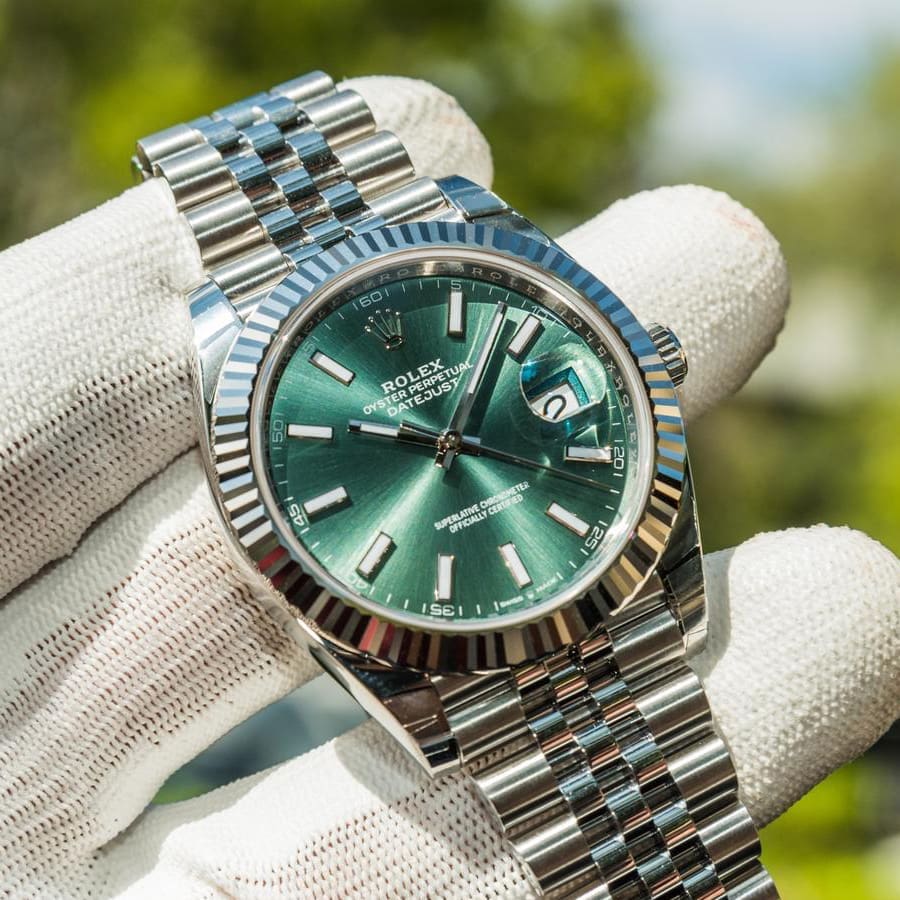
Rolex
What they do: Maintain consistent pricing across every channel and refuse to build paid campaigns around any discount mechanic, even during broader market slowdowns.
Why it works: Held pricing signals confidence to the exact audience the brand needs to convince, and protects resale value, which is itself part of the product’s appeal.
Key lesson: In categories where resale and heritage matter, pricing discipline in paid media is not a constraint on performance. It is the performance strategy.
A Practical Four-Step Model
Any hotel or premium brand marketer can apply this sequence to their next paid media brief, mapped directly to the guest or client journey.
- Discovery: cinematic, low-copy creative to cold, narrowly defined audiences, no offer or price mentioned
- Consideration: editorial proof and landing pages that continue the brand story, aimed at warm site visitors
- Decision: access-based offers, such as private consultations or early booking windows, retargeted to engaged users only
- Retention: first-party audience building from every enquiry and booking, feeding the next campaign’s targeting
The Wrap-Up
Paid media reads as luxury when creative, audience, landing pages and offers all protect the same scarcity the brand protects everywhere else, and reads as promotional the moment any one of them breaks that discipline.
Getting luxury paid media right is a design decision made before the campaign brief is written, not a tone applied to the ad copy afterward. The practical next step is an audit: look at the last three paid campaigns your brand ran and check whether the offer, audience and landing page would still make sense without the ad driving traffic to them. If they would not, that is where the work starts.

Written By: Sophia Evgeniou, Chief Marketing & Growth Officer
Giant Leap Digital is a Mayfair-based luxury digital marketing agency working with five-star hotels, fine jewellery houses, fashion, automotive, private aviation, and premium wine and spirits brands to build discovery strategy around how top-tier clients actually find a brand, not how the mass market does. We do not work in generalities.
FAQS
Does luxury paid media ever include discounts?
Rarely, and only in controlled contexts such as private client sales or end-of-season inventory, never as the headline message in open paid campaigns.
How do you measure success without focusing on cost per click?
Guest or client lifetime value, average order value, and the quality of the audience a campaign builds for future retargeting matter more than click cost alone.
Is paid social worth it for luxury brands, or only paid search?
Both play distinct roles. Search captures existing intent efficiently, while paid social builds the world a buyer wants to belong to; luxury brands need both, sequenced correctly.
Should luxury brands use influencer partnerships in paid media?
Selectively, and only with creators whose existing audience already matches the brand’s guest or client profile, since a poor fit does more damage than the campaign it was meant to support.
How small should a luxury audience segment be?
Smaller than most performance marketers are comfortable with. A qualified segment of a few thousand first-party contacts will usually outperform a broad lookalike audience of hundreds of thousands.
- SEO for Luxury Brands: Why Rankings No Longer Tell the Full Story
- What Makes Paid Media Feel Luxury Instead of Promotional? A Guide for Premium Brands
- Why Your Luxury Brand Isn’t Generating Enough Qualified Leads
- Luxury SEO in 2026: Why Rankings Don’t Equal Revenue
- Luxury Copywriting for HNW Clients: How to Write Copy That Converts

