
Luxury copywriting for HNW clients is too often judged by how it sounds rather than what it does. A paragraph can read beautifully and still fail to produce a single qualified enquiry. The two are not the same discipline, and treating them as interchangeable is the most expensive mistake a luxury brand can make in its written content.
Most marketing directors in this space inherited a house style built for admiration rather than conversion. It photographs well, it wins internal praise, and it does almost nothing to move an HNW prospect from discovery to enquiry. The pressure is real: boards want brand equity protected, but they also want pipeline, and copy that only achieves the former is quietly failing at its actual job.
This piece sets out why that gap exists, what the research says about how affluent buyers actually process persuasive language, and a practical framework for writing luxury copy that protects brand equity while producing measurable commercial results. It closes with a model any luxury marketing team can apply directly to their next brief.
What Is Luxury Copywriting
Luxury copywriting is the practice of writing brand and product content for high-net-worth and ultra-high-net-worth audiences that protects perceived exclusivity, heritage, and brand equity, while still driving a specific, measurable commercial action, such as a qualified enquiry, consultation request, or booking. Unlike mass-market copy, it cannot rely on urgency, discounting, or broad appeal. It works instead through precision, specificity, and a confident, singular point of view that speaks to a reader who already understands the category and expects the brand to know it too.
Why Beautiful Copy Often Underperforms
Copy that prioritises tone over intent tends to describe a feeling rather than direct a decision. It lingers on texture, heritage, and atmosphere, and stops short of telling the reader what happens next. For an HNW audience already fluent in luxury signalling, that restraint reads as uncertainty, not sophistication.
The commercial cost is specific and measurable:
- Fewer qualified enquiries reaching the sales or reservations team.
- Longer, vaguer conversations at the enquiry stage because the copy did the wrong job upstream.
- Weaker attribution, since ambiguous calls to action are harder to track and optimise.
- Diluted brand equity over time, because inconsistent messaging is functionally indistinguishable from indecision.

The Academic Model: Language Assertiveness and the Luxury Buyer
A 2012 Journal of Consumer Research study by Ann Kronrod, Amir Grinstein and Luc Wathieu examined how assertive language (“Buy this”) performs against suggestive language (“You might want to consider this”) across hedonic and utilitarian purchases. Their finding was precise: assertive phrasing significantly increases purchase intention for hedonic and identity-driven products, while the same directness can backfire for purely functional ones.
Luxury purchases are almost entirely hedonic and identity-driven. The HNW buyer is not being persuaded that a product exists or that they can afford it. They are deciding whether this brand understands them well enough to speak to them without hedging. Suggestive, softened copy, the kind most luxury brands default to in the belief that subtlety equals sophistication, works directly against how this audience is proven to respond. Confidence in language is not a stylistic choice. It is a conversion variable.
Generic Luxury Copy vs Commercial Luxury Copy
| Element | Generic luxury copy | Commercial luxury copy |
| Tone | Suggestive, softened, adjective-led | Assertive, specific, verb-led |
| Focus | Describes the experience | Directs the decision |
| proof | Vague heritage claims | Named specificity (place, process, provenance) |
| Call to action | Implied or absent | Explicit, singular, and confident |
| Measurement | Engagement, dwell time | Qualified enquiries, enquiry-to-conversion rate |
Real-World Examples Across Categories
Boodles
What they do: Build product copy around the specific craftsman, stone origin, and commissioning story rather than generic superlatives.
Why it works: Specific, verifiable detail gives the reader something concrete to remember and repeat, which adjectives cannot do.
Key lesson: One named detail outperforms three descriptive adjectives.

Macallan
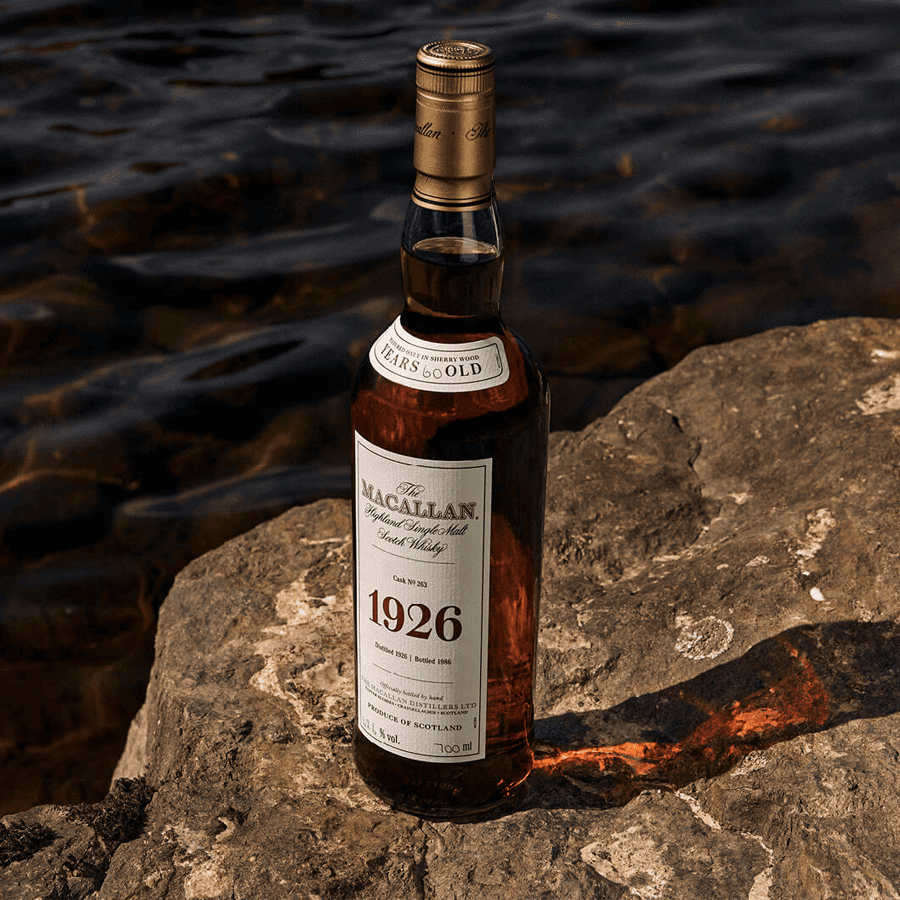
What they do: Position statement releases through provenance data such as cask number, distillation year, and warehouse, rather than words like exceptional or rare.
Why it works: Precision signals authority and authenticity to a buyer who already expects quality, so the copy earns trust instead of just claiming it.
Key lesson: Data points can carry more persuasive weight than adjectives in a category built on provenance.
Bentley
What they do: Write bespoke commissioning copy in active, directive language that tells the prospect what to specify next.
Why it works: This matches the Kronrod assertiveness principle directly, directive language increases purchase intent for hedonic, identity-driven products like a bespoke car.
Key lesson: Directing the decision converts better than describing the feeling.


NetJets
What they do: Structure copy around decision speed and certainty for time-poor UHNW buyers.
Why it works: This audience is buying resolution, not romance, so copy that removes friction and ambiguity performs better than copy built for atmosphere.
Key lesson: Understand what the buyer is actually purchasing, certainty, status, or time, and write to that, not to the category default.
An Internal View
“The biggest tell that a piece of luxury copy was written to impress a client rather than convert one is the absence of a single clear instruction to the reader. Every HNW-facing page should answer one question by the end: what do I do now. If it doesn’t, it’s a brochure, not a copy.”
Michele Baker, Giant Leap Copywriter.

The Precision Copy Framework
A practical four-stage model for auditing or briefing luxury copy against commercial outcomes rather than tone alone.
| Stage | What it requires |
| Specify | Replace generic luxury adjectives with one verifiable, specific detail (place, process, number, name). |
| Direct | Every section ends with an explicit next action, stated once, without hedging. |
| Prove | Support the claim with a data point, provenance detail, or named example, not sentiment. |
| Measure | Attribute the copy to a tracked outcome: enquiry, call booked, consultation requested. |
Mapping Copy to the HNW Decision Journey
| Discovery stage copy | This should be structured for both search engines and AI answer engines in 2026: clear H1/H2 architecture, direct answers to the reader’s likely query within the first two sentences of each section, and language precise enough that an AI overview can accurately summarise the brand’s positioning without distortion. |
| Consideration stage copy | This should shift from description to differentiation, using the specificity principle above to separate the brand from category peers who are still writing in adjectives. |
| Decision stage copy | This carries the heaviest commercial weight. This is where assertive, single-action language matters most, and where most luxury brands still soften their nerves. |
| Post-enquiry copy | In follow-up sequences and confirmation messaging, should maintain the same register established at discovery. Inconsistency here is one of the most common, and most avoidable, sources of brand equity erosion. |
The Wrap-Up
Luxury copywriting for HNW clients succeeds when it is judged on qualified enquiries and measurable growth, not on how well it reads in isolation. The brands winning attention and conversion in 2026 are the ones writing with precision and confidence, not the ones writing the most beautifully.
The takeaway for any marketing director briefing their next piece of luxury copy: replace one adjective with one verifiable detail, and replace one hedge with one clear instruction. That single edit is often the difference between admired copy and copy that converts.

Written By, Hannah Blunt; Luxury Account Strategist.
Giant Leap Digital is a Mayfair-based luxury digital marketing agency working with five-star hotels, fine jewellery houses, fashion, automotive, private aviation, and premium wine and spirits brands to build discovery strategy around how top-tier clients actually find a brand, not how the mass market does. We do not work in generalities.
FAQ’s
What makes luxury copywriting different from standard commercial copywriting?
Luxury copywriting has to protect brand equity and desirability while still driving a measurable action. It cannot rely on urgency or discount language, so precision, specificity, and controlled assertiveness carry the commercial weight instead.
Does luxury copy need a strong call to action, or does that undermine exclusivity?
A confident, singular call to action does not undermine exclusivity. Research on language assertiveness shows the opposite: hedging and vague suggestion read as uncertainty to HNW audiences, while clear direction reads as authority.
How should luxury copy be structured for AI search and answer engines in 2026?
Each section should open with a direct, self-contained answer to the likely query, followed by supporting specificity. This structure serves both traditional SEO and generative engine optimisation, since AI systems summarise content that already states its point clearly.
How do you measure whether luxury copy is commercially effective?
Track qualified enquiries generated per page or campaign, enquiry-to-conversion rate, and the specificity of language used in inbound enquiries themselves, which typically improves when the source copy was precise rather than generic.
Can luxury copy be data-informed without losing its tone?
Yes. Specificity, provenance detail, and named examples are data-informed choices that strengthen tone rather than compromise it. The failure mode is copy that avoids all detail in favour of atmosphere.
- SEO for Luxury Brands: Why Rankings No Longer Tell the Full Story
- What Makes Paid Media Feel Luxury Instead of Promotional? A Guide for Premium Brands
- Why Your Luxury Brand Isn’t Generating Enough Qualified Leads
- Luxury SEO in 2026: Why Rankings Don’t Equal Revenue
- Luxury Copywriting for HNW Clients: How to Write Copy That Converts

