
The biggest marketing mistakes luxury brands make rarely look like mistakes at the time. They look like strategy: a bigger reach number, a busier content calendar, a campaign that photographs beautifully. Global luxury spending reached €1,443 billion in 2025 and is expected to hover close to flat through 2026, according to the latest Bain-Altagamma Luxury Goods Worldwide Market Study, and in a market growing this slowly, the cost of a wasted marketing pound is no longer absorbed by momentum. It is simply lost. This article sets out the five most common and most expensive errors we see luxury brands make, and the operating model that replaces them.
Key insight: In a stabilising market, luxury brands are not competing for attention. They are competing for a shrinking pool of consumers who already have too much of it, and the brands winning are the ones measuring relevance, not reach.
The mistakes covered in this piece:
- Chasing impressions instead of intent
- Treating organic social as a strategy rather than a channel
- Underinvesting in SEO and AI discoverability
- Running disconnected campaigns across teams and platforms
- Operating without a CRM strategy
If you are a CMO or marketing director at a five-star hospitality group, a fine jewellery house, or a heritage fashion or automotive brand, you already know the discomfort of a marketing report that looks impressive and converts poorly. The pressure to show activity, more content, more channels, more impressions, often crowds out the harder discipline of building measurable, compounding value with a defined audience. That gap between activity and outcome is where luxury brand equity quietly erodes, one disconnected campaign at a time.
What follows is not a list of generic marketing advice repackaged for a luxury audience. It is a diagnostic, built on a specific academic model of how luxury value is actually perceived, a practical audit framework you can apply this quarter, and real examples of brands getting this right. We will close with a five-question audit any luxury marketing director can run internally before the next campaign brief is written.

Chasing Impressions Instead of Intent
Impressions are the easiest number to grow and the least correlated with revenue in luxury marketing. A £2 million private jet is not sold on reach. Yet many luxury brands still brief campaigns around impression targets because they are simple to report upward. The result is spend directed at audiences who will never convert, dressed up as brand awareness.
The fix is intent-based targeting: income proxies, travel and purchase signal data, and luxury brand affinity modelling, paired with creative that speaks to a considered decision rather than an impulse one. One well-targeted campaign reaching 50,000 qualified prospects will outperform one reaching five million cold ones, every time it is measured against revenue rather than reach.

Relying on Organic Social as a Strategy, Not a Channel
Organic social has a role in luxury marketing. It is not, on its own, a discovery strategy, and treating it as one is one of the most common luxury marketing strategy mistakes we encounter. Algorithms change without notice, reach is inconsistent, and a brand’s most valuable audience, the HNW and UHNW consumer, is often not the audience an algorithm is optimising to show content to in the first place.
Organic social builds texture and credibility. It should sit inside a wider luxury digital marketing mix that includes paid precision targeting, editorial PR, and owned content the brand actually controls. A brand entirely dependent on organic reach has effectively outsourced its discoverability to a platform with no obligation to deliver it.

Underinvesting in SEO and AI Discoverability
This is now the most consequential mistake on this list. Bain & Company’s 2026 luxury AI research found that roughly 70 percent of luxury-related AI queries do not name a specific brand, yet only 48 percent of luxury brands track how they perform in large language model responses, and only 10 percent rate their visibility as strong (source: bain.com). The consumer asking an AI assistant to recommend a five-star resort in the Maldives, or the best fine jewellery house for an engagement ring, is being handed a shortlist that a great many luxury brands have no presence in at all.
Search engine optimisation was never optional for luxury brands with real intent-driven demand. It has now split into two disciplines that must be run together: traditional SEO for search engines, and generative engine optimisation, GEO, for the AI systems increasingly mediating discovery before a consumer ever reaches a website. A brand invisible in both is invisible at the exact moment a high-intent decision is being formed.

Running Disconnected Campaigns Across Channels
A paid social campaign, a PR push, and an email sequence that were briefed separately, by different teams, on different timelines, rarely tell one coherent story. The luxury consumer moves fluidly across channels before a single purchase decision. When the brand they encounter is inconsistent in tone, offer, or narrative across those channels, the fragmentation itself becomes a signal, and not the one the brand intended.
Disconnected campaigns are usually a structural problem, not a creative one: separate agencies, separate budgets, separate KPIs, no shared measurement framework. The fix starts with a single strategic brief that every channel executes against, and a shared view of the customer journey so that paid, organic, PR, and CRM are reinforcing the same narrative rather than each optimising in isolation.
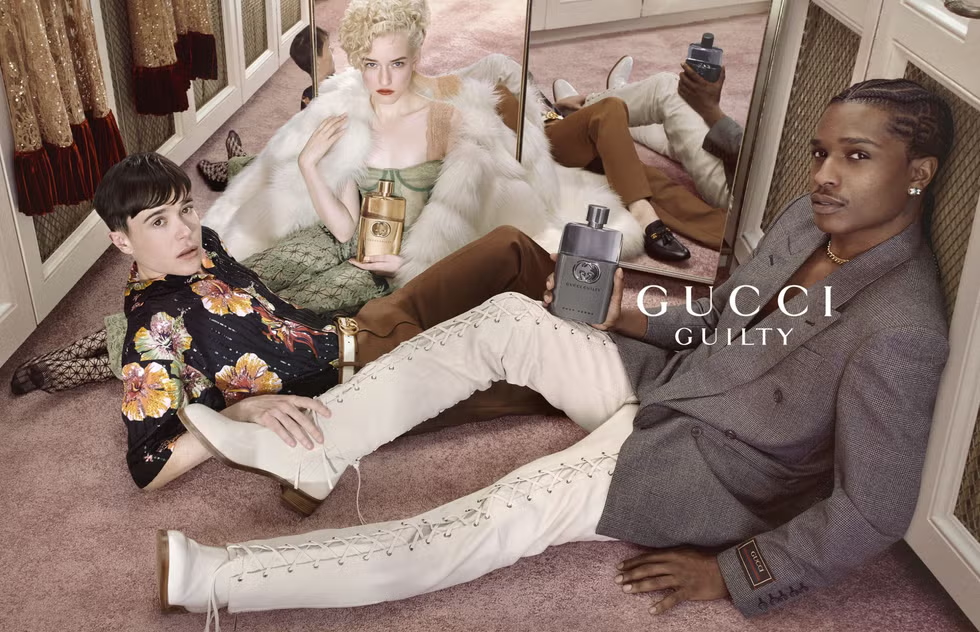
No CRM Strategy: Treating Every Guest Like a Stranger
Of every mistake on this list, an absent CRM strategy is the most expensive because it compounds. Acquisition without retention means a brand is permanently paying full price to reintroduce itself to consumers it has already earned a relationship with. Luxury purchases are infrequent by nature, which makes the data captured at each touchpoint disproportionately valuable, and disproportionately wasted when it sits unused in a system nobody activates.
A luxury brand without CRM is not being discreet, it is being forgetful, and forgetful is the one thing a HNW client never forgives twice. A functioning CRM strategy turns a single transaction into a managed relationship: preferences recorded, milestones recognised, communication sequenced around the customer’s actual behaviour rather than a generic calendar. This is the single highest-leverage fix on this list, and the one most consistently skipped.
Ben Lilly, Founder of Giant Leap Digital.

The Luxury Value Perception Model: Why These Mistakes Happen
Most luxury marketing mistakes trace back to the same root cause: a narrow view of what luxury value actually is. Marketing academics Klaus-Peter Wiedmann, Nadine Hennigs, and Astrid Siebels developed the Luxury Value Perception model, first published in 2007 and validated further in 2009, which holds that consumers evaluate luxury brands across four distinct value dimensions: financial value, the price, resale, and investment logic; functional value, usability, quality, and uniqueness; individual value, self-identity, hedonic pleasure, and personal meaning; and social value, status, prestige, and how the brand is perceived by others.
Each mistake above is really a failure to address one of these dimensions. Chasing impressions ignores individual value. Weak SEO and GEO forfeits functional value, being findable when it matters. Disconnected campaigns undermine social value through inconsistent positioning. No CRM strategy abandons individual value entirely, the very dimension personalisation exists to serve. Used precisely, the model is not academic decoration. It is a diagnostic for exactly where a marketing strategy is thin.
Mistake and Value Dimension Neglected, at a Glance
Chasing impressions: neglects individual value, the personal relevance a HNW consumer needs to act
Organic-social dependency: neglects social value, since inconsistent reach undermines consistent status signalling
Weak SEO and GEO: neglects functional value, because a brand that cannot be found has no usability at all
Disconnected campaigns: neglects social value, through a fractured, inconsistent brand narrative
No CRM strategy: neglects individual value, by treating every returning client as a stranger
Real-World Brands Getting This Right

Aesop
What they do: Builds long-form editorial content and precise SEO structuring around skincare and grooming queries, deliberately avoiding discount-driven paid tactics.
Why it works: The approach speaks to functional and individual value simultaneously, and it is what makes the brand appear authoritative in both search engine and AI results.
Key lesson: Authority in search and AI discovery is earned through editorial depth, not bought through discounting.
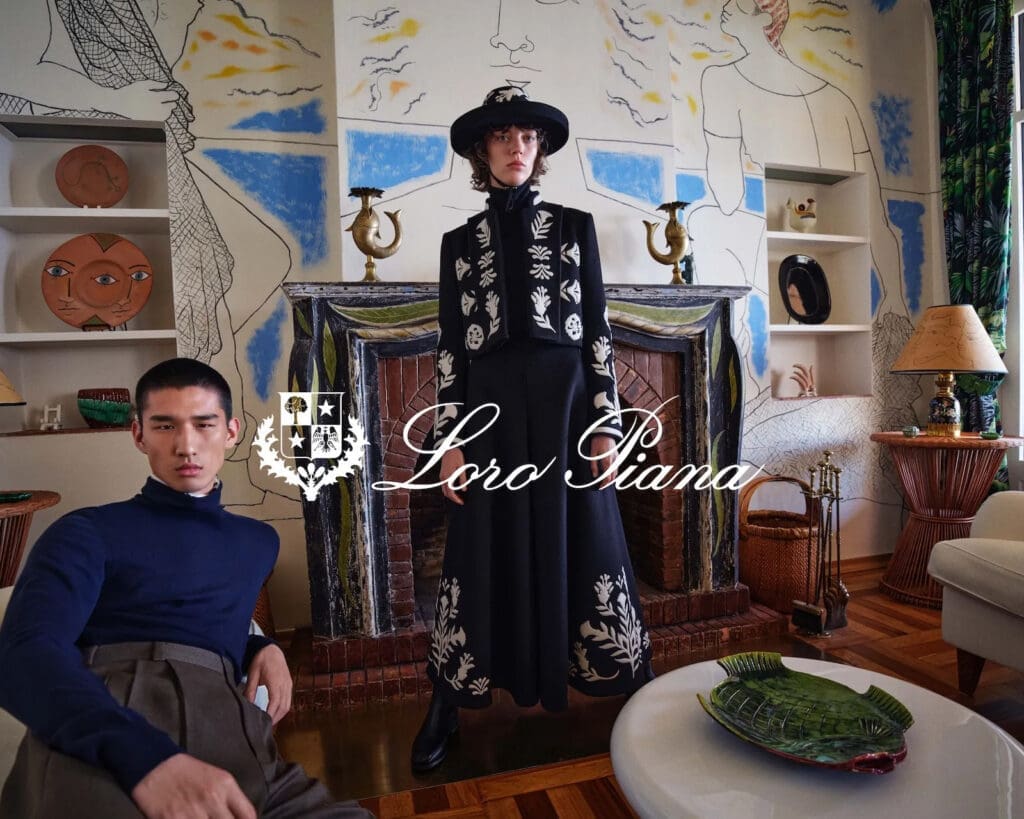
Loro Piana
What they do: Communicates almost entirely through quality, material provenance, and restraint rather than overt status signalling.
Why it works: The deliberate emphasis on functional and individual value over social signalling has proven durable as quiet luxury has moved from trend to expectation.
Key lesson: Restraint, not visibility, is what sustains brand equity once a positioning outlives its trend cycle.

De Beers
What they do: Invests heavily in CRM-led personalisation for the engagement ring category.
Why it works: It recognises that a single significant purchase deserves a managed relationship stretching years before and after the transaction, not a one-off campaign push.
Key lesson: Infrequent, high-value purchases demand CRM investment proportional to their emotional and financial stakes, not their frequency.
Aman
What they do: Builds its entire discovery strategy around owned content and editorial-grade storytelling rather than paid reach.
Why it works: It trusts that the individual and social value of the brand will do the work that impressions cannot.
Key lesson: Owned storytelling can outperform paid reach when the brand’s value proposition is strong enough to carry it on its own.

The Five-Point Luxury Marketing Audit
A practical framework any luxury marketing director can run before the next quarterly plan is signed off.
- Intent audit: does this campaign target defined purchase intent, or reach for its own sake
- Discoverability audit: does the brand appear in both traditional search and AI-generated answers for its category
- Consistency audit: would a consumer moving from a paid ad to an email to the website experience one coherent narrative
- Data audit: is every first-party interaction being captured, structured, and activated, or simply stored
- Value-dimension audit: which of the four luxury value dimensions, financial, functional, individual, social, is this campaign strongest and weakest against

Guest and Client Journey: Where the Mistakes Actually Bite
| Before discovery: | A brand invisible in SEO and AI search has already lost the client before the relationship began. This is where the cost of the third mistake on this list is paid, silently and continuously. |
| During consideration: | Disconnected messaging across channels creates doubt at precisely the moment a HNW consumer is comparing options and looking for certainty, not inconsistency. |
| At purchase: | This is the one moment most luxury brands execute well, since it is the most visible and most invested-in stage of the journey. |
| After purchase: | This is where CRM absence is most costly. Without a structured relationship, the brand has no mechanism to convert a single purchase into customer lifetime value, and the client’s next luxury purchase is left entirely to chance. |
The Wrap-Up
The biggest luxury marketing mistakes rarely begin with bad creative. They begin with the wrong question.
Instead of asking how much attention a campaign generated, marketing leaders should ask whether it reached the right audience, strengthened the brand, created qualified demand, or increased customer lifetime value. In a slower-growth market, precision becomes more valuable than volume. The brands that win will not necessarily produce more marketing.
They will make better decisions about where, when, and why they market. The goal is not more activity. It is more commercial value from every interaction.

Written by, Hannah Blunt, Luxury account strategist.
FAQ’S
What is the most common marketing mistake luxury brands make in 2026
Underinvesting in SEO and AI discoverability is currently the most consequential, because the majority of luxury-related AI search queries do not name a specific brand, meaning brands with weak search and GEO presence are simply absent from the shortlist before a consumer ever visits their website.
Why does organic social media fail as a standalone luxury marketing strategy
Organic reach on social platforms is inconsistent, algorithm-dependent, and not reliably shown to the HNW and UHNW audiences luxury brands most need to reach, making it a supporting channel rather than a primary discovery strategy.
How does CRM improve customer lifetime value for luxury brands
CRM converts a single purchase into a structured, ongoing relationship by capturing preferences and behaviour at every touchpoint and activating that data through personalised, sequenced communication, which is what drives repeat purchase and long-term customer retention rather than one-off transactions.
How can a luxury brand measure whether its marketing strategy is working
Effective luxury brand measurement looks beyond impressions and engagement to intent-qualified conversion, AI and search visibility, cross-channel narrative consistency, and customer lifetime value generated through CRM-activated relationships, not reach alone.
- SEO for Luxury Brands: Why Rankings No Longer Tell the Full Story
- What Makes Paid Media Feel Luxury Instead of Promotional? A Guide for Premium Brands
- Why Your Luxury Brand Isn’t Generating Enough Qualified Leads
- Luxury SEO in 2026: Why Rankings Don’t Equal Revenue
- Luxury Copywriting for HNW Clients: How to Write Copy That Converts

