
The standard marketing funnel: awareness, interest, desire, action (AIDA), or its more sophisticated descendants was codified in mass consumer culture. It assumes the goal is throughput: move as many people as possible from one stage to the next. Every friction point is a problem to be engineered away.
This logic is antithetical to luxury. The selective admission of customers, the deliberate cultivation of longing, the structural inaccessibility of certain products these are not inefficiencies. They are the product. Scarcity is not a supply constraint; it is a demand technology.
Kapferer and Bastien, in their foundational text The Luxury Strategy, articulate this as the “anti-laws of marketing.” Where conventional strategy seeks to grow the customer base, luxury must actively manage exclusion. Where mass brands democratise, luxury stratifies. The funnel, as a concept, implicitly violates several of these anti-laws particularly the one that reads: do not respond to rising demand.
71% of luxury consumers say brand heritage influences purchase, yet most luxury funnels never surface it. (Bain & Company, Global Luxury Study 2023). Customers acquired through editorial or cultural association deliver 3.4× higher lifetime value vs. paid digital (McKinsey Luxury Pulse, 2022). The global personal luxury goods market stands at $1.5T yet conversion-rate optimisation is decimating perceived value (Statista, 2024).
“Luxury is not about selling more. It is about selling meaning repeatedly, to the right people, at a price that maintains the integrity of the myth.”
The Theoretical Frame: The semiotics of desire
Veblen’s concept of conspicuous consumption (1899) remains the most cited, framework for luxury behaviour. Most marketers read it as: people buy expensive things to signal wealth. This is correct but incomplete. The signal only functions if the audience can read it which requires cultural education, a shared symbolic vocabulary, and a community of initiates who understand the code.
Luxury consumption is not a transaction; it is a performance of belonging. The Hermès Birkin is not a bag. It is a claim to a specific social position one that requires the buyer to already know certain things: the waiting list, the atelier relationship, the correct way to be offered one. The funnel cannot manufacture this knowledge. It can only attract or repel those who already possess it.
Case Anatomy: What Bottega Veneta understood that most brands do not
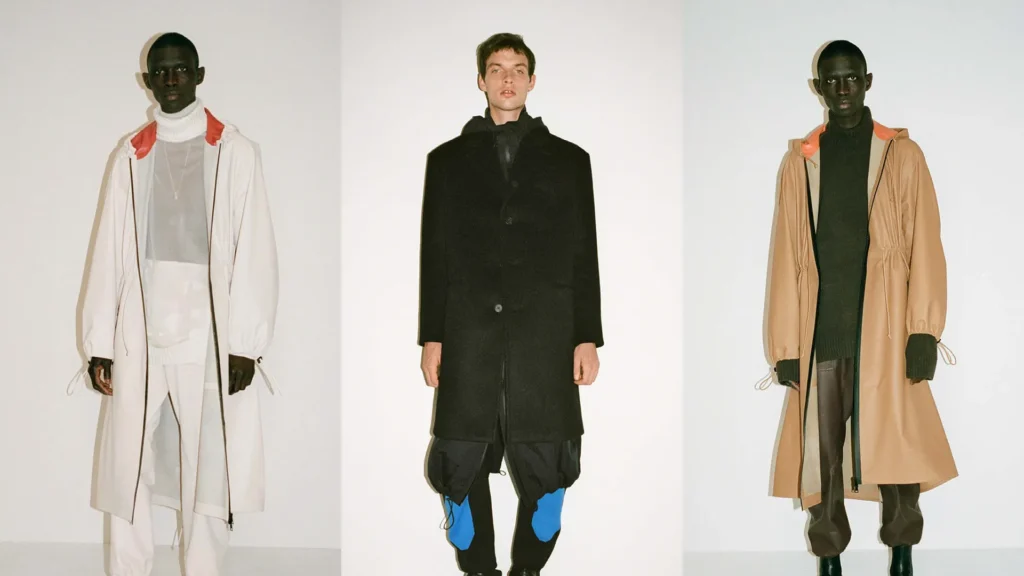
In January 2021, Bottega Veneta deleted all of its social media accounts Instagram, Facebook, Twitter, WeChat. Under creative director Daniel Lee, the brand had achieved near-total cultural dominance without a conventional digital funnel. Its aesthetic circulated through earned desire: stylists, editors, and a small network of cultural figures who acted as involuntary ambassadors.
The move was not a stunt. It was a precise articulation of Bottega’s brand logic: we are not available to everyone; we are not even searchable by everyone. The brand created what might be called a negative funnel one that generates demand through withdrawal rather than presence. Revenue grew. Waitlists formed. The absence of content became content.

Contrast this with Burberry’s much-cited 2010s digital pivot under Angela Ahrendts. The brand embraced social media comprehensively, streamed runway shows, pursued digital accessibility. Short-term awareness metrics improved dramatically. But the brand’s positioning eroded, it became, in the words of several industry analysts, “aspirational” rather than “luxury.” The distinction is not semantic. Aspirational brands are desired by people who cannot afford them. Luxury brands are desired by people who choose them from a position of abundance. The funnel conflated the two.
The Framework: From funnel to field
The funnel metaphor must be abandoned. In its place, luxury marketers should think in terms of fields (after Bourdieu) or galaxies (after Jean-Marie Floch’s semiotic model). The brand is not at the top of a funnel, converting prospects. It is at the centre of a gravitational field, attracting culturally aligned individuals and repelling others.
| Funnel logic | Maximise reach → qualify leads → convert → retain. Every stage optimised for throughput. Drop-off is failure. |
| Field logic | Cultivate a myth → attract initiates → deepen relationship → generate cultural reproduction. Exit is sometimes correct. |
In practical terms, this reframes several key decisions. Paid social advertising, the default acquisition channel for most brands is structurally corrosive to luxury positioning. The algorithmic distribution of luxury content to non-qualified audiences is not neutral exposure; it is an act of democratisation. Every impression served to someone who cannot or will not buy erodes the semiotic exclusivity of the brand.
This is not an argument against digital channels. It is an argument against undifferentiated digital channels. Chanel’s digital strategy operates through a logic of cultural placement rather than media buying: documentary-style content on YouTube, editorial partnerships, the deliberate absence of e-commerce for fragrance (sold only in-store or through approved retailers in specific markets). The brand controls not just what is communicated but where and to whom the communication is visible.
The Intervention: Five structural corrections
- Replace conversion rate with cultural coherence as the primary KPI. The relevant question is not “what percentage of people who saw the ad bought?” but “does the set of people who engage with this brand reflect the social position we intend to occupy?” This requires qualitative research, not click-through data.
- Introduce deliberate friction at the point of acquisition. The Patek Philippe purchase process involves multiple consultations, waiting periods, and in some cases, a history of prior purchases. This is not inefficiency, it is the mechanism by which the brand produces committed, culturally legitimate owners. The friction is the luxury.
- Invest in the pre-funnel: cultural production. Rolex does not advertise watches. It associates itself with tennis, deep-sea exploration, and golf spheres whose cultural capital transfers to the product. The brand’s media investment creates an aspirational imaginary that precedes any individual’s awareness of a specific product. Most brands mistake this for “brand awareness.” It is closer to myth-making.
- Manage distribution as aggressively as product. LVMH’s acquisition strategy is partly about talent and craft, but it is also about channel control. The removal of Dior and Givenchy from department stores was a positioning decision, not a commercial one. Where the product appears determines what the product means. A luxury brand on Amazon has answered the wrong question.
- Design for exit as well as entry. The question “how do we prevent churn?” misframes the problem. Some customers should be allowed or encouraged to exit to adjacent aspirational brands as their cultural capital changes. The Porsche-to-Ferrari trajectory is not churn; it is a designed ecosystem. Brands that fight this trajectory often degrade their own positioning to retain customers who no longer belong.
The broken luxury funnel is not a failure of execution. It is a failure of category thinking the unreflective application of mass-market architecture to a domain that operates on inverted logic. The corrective is not a better funnel. It is a fundamental reorientation toward the management of meaning, the cultivation of cultural legitimacy, and the deliberate engineering of desire through restraint.
Luxury has always understood that the most powerful marketing is the kind that makes certain people feel they have discovered something, rather than been sold something. The funnel cannot produce that feeling. The field can.

Written by, Hannah Blunt.
Luxury Account Strategist
- SEO for Luxury Brands: Why Rankings No Longer Tell the Full Story
- What Makes Paid Media Feel Luxury Instead of Promotional? A Guide for Premium Brands
- Why Your Luxury Brand Isn’t Generating Enough Qualified Leads
- Luxury SEO in 2026: Why Rankings Don’t Equal Revenue
- Luxury Copywriting for HNW Clients: How to Write Copy That Converts

