From Carnival Cruises to CEO
Jonathan, you built your career in marketing, from Carnival Cruises and Golf Breaks to Berry Bros. & Rudd. Where did it all begin, and how did that journey lead you to become CEO?
Like most young people who love sport, I wanted to be a professional footballer or cricketer. Quite frankly, any sport would have done. I soon realised that wasn’t going to happen, and I stumbled through school not quite knowing what I wanted to do. That probably explains why I chose a Business Studies degree.
I’ve always got on well with people and understood them, so marketing felt like a natural fit. I don’t consider myself creative in the visual sense, but I’ve always loved creativity and being around creative people. Ironically, my best grades were often in the financial modules, despite my passion and enjoyment of the marketing ones. So the stumbling theme continues.
After the inevitable few months travelling around Australasia, I came home to be told by my father that I needed a haircut and a job! I started as a marketing assistant at Carnival Cruises in Southampton. It was a fantastic grounding, touching every part of the marketing mix in a business of real scale. But after 18 months or so, I knew cruising wasn’t something I was passionate about.
So when a role came up at Golf Breaks, I moved quickly. Promoting a product I genuinely loved turned out to matter a great deal. Then I fell into a role at Berry Bros. & Rudd. If I’m honest, it was the job description and a shorter commute that caught my attention. But as I stumbled through the door for the interview, I quickly realised it was an amazing business, and that the wine trade could be a lot of fun.
Twenty years later, here I am, still in the wine trade. What an incredible experience it’s been.
Lessons from Berry Bros. & Rudd
You spent around nine years at Berry Bros. & Rudd. How did that shape the way you approach things today?
It was a formative stage of my career, so it inevitably had a big impact. I experienced many wonderful things and met so many inspiring people. But one conversation really sticks in my mind. It set me on a path that comes down to embracing tradition while evolving with time.
As Head of Marketing, I spent a fair amount of time with Simon Berry, the former Chairman and a seventh-generation family member. One day he said to me:
“Look, Jonathan, what you have to remember is that everyone says what they love about Berry Bros. & Rudd is that it never changes. The reality is the business has changed dramatically in 300 years. There’s no way a business can continue to be successful if it stands still. The achievement is that we’ve evolved remarkably over all that time, and no one seems to have noticed.”
That illustrated the perfect balance for me. You evolve, progress and keep growing commercially, while staying rooted in the customer and what you stand for. The consumer simply warms to the business as it changes alongside them.
The favourite uncle
Berry Bros. also drew me towards a classic Britishness, or Englishness if you like. An unquestionable focus on craft, perfection and detail. A relentless drive to improve, and always a will to try something different. As craftspeople, we’re unafraid to show personality, a sense of humour, fun and excitement.
I often use an analogy that my former colleagues are probably fed up with: the favourite uncle. He’s always good fun at a family gathering and the one who makes you laugh. But he’s also the person you really listen to and trust for guidance. That’s how a business can mean more to people than the products it sells, and it shapes how we present Gusbourne to the world today.
“Think of the classic favourite uncle: someone who’s always good fun, but someone you really listen to as well.”
Taking English wine to the world
Twenty years ago, few would have called fine sparkling wine typically English. Gusbourne first exported to Japan in 2015 and is now in more than 40 markets. How have you seen that evolve?
It’s been really interesting to see how the trade reacts. Sommeliers, F&B directors and retail buyers are far more willing to talk about listing an English wine than they were 15 or 20 years ago. The door started opening around ten years ago, but it’s still a challenge in many places.
We’re still tiny. By my recent calculation, England makes something like 0.01% of the world’s wine, despite the UK now having around 1,200 vineyards. English wine is only 3 or 4% of the sparkling wine enjoyed in England. Even when you remove Prosecco, which takes the lion’s share, there’s a massive opportunity at home. And then you think: wow, the world.
Internationally, the interchangeability of British and English is a real challenge. Many markets can’t quite get their heads around England, Great Britain and the UK. So we often just say we’re an hour from London. Everyone nods and understands.
“We often just say that we’re an hour from London. Everyone nods and understands.”
What’s fantastic is how little we’ve adapted our approach across 40-odd markets. There are subtle tactical differences in the supply chain and marketing. But simply put, we work with great distribution partners who sell to luxury, super-premium hotels and restaurants. Then we establish a foothold through critical recognition. If a great restaurant chooses our wines to showcase its food, consumers take their lead from that.
Ten years ago, English wineries traded on being similar to Champagne. We’ve matured since. Our wines are commensurate in quality with Champagne, but they are different. You don’t buy English wine because you want a Champagne. You buy it for its vivacity: that moreish, mouth-watering balance of acidity and fruit, and how wonderfully it matches food.
Our best-known wine is the Blanc de Blancs, 100% Chardonnay. It works so well with seafood and shellfish, which resonates in fine dining. Chardonnay is also more robust in our unpredictable climate than Pinot Noir and Pinot Meunier, which are notoriously harder to ripen.
Our wines tend to thrive where there’s a historic relationship with Britain. The Japanese love British craftsmanship, which made it easier to launch there. Americans look on Britain as a small cousin with a wonderful history of crafting things. But the most successful market for all English wine right now is Norway, and Scandinavia in general. There are historic links, a love of seafood and shellfish, and a real appetite for new trends. England is the latest new wine region, and they’re early adopters.
Building a respected luxury brand
Gusbourne is now synonymous with luxury, but credibility isn’t built overnight. What has worked best in building such a respected brand?
It probably goes without saying, but provenance is absolutely critical. We only use fruit grown in our own vineyards, and we only make vintage wines that tell the story of a time and a place. That frames us alongside the great fine wines of the world: Champagnes, Burgundies, Super Tuscans and the Classed Growths of Bordeaux.
A coherent, consistent and compelling narrative was the absolute first step. In my early years at Gusbourne, and before I joined, we spent a lot of time establishing what the brand stands for. Its look and feel, its tone of voice, everything. We did that almost before we created a market for the products. So once we did, everything looked coherent.
Then we sought critical recognition. Our wine is served in some of the greatest restaurants and finest hotels in the world, and has been poured at state banquets, the London Olympics and in royal households. We also worked closely with brands we aspired to be mentioned alongside, such as Bremont, Penhaligon’s and Paul Smith. We served our wines at their events and created content together, which positioned us among the great British craft brands.
Scarcity matters too, and thankfully we never had to work hard at it. Our production limits mean our wines are, and always will be, scarce. Someone I greatly respect within the business once told me that where your wines are served ultimately says a lot about who you are. That really resonated. So we’ve been selective, rather than taking every commercial opportunity. We control distribution very carefully: hand-selling, educating and building partnerships.
“Where your wines are served ultimately says a lot about who you are.”
Wine is intended to be convivial. It accompanies entertainment, gastronomy and celebration. So the work should be fun and exciting too, and I want our teams to approach it that way. That helps us become friends with our customers, rather than account managers or points of contact. The business promoted this culture before I became CEO, and I’ve been very keen to maintain it.
An early harvest
We hear on the grapevine, if you’ll excuse the pun, that 2026 brought a very early harvest. How has the year been?
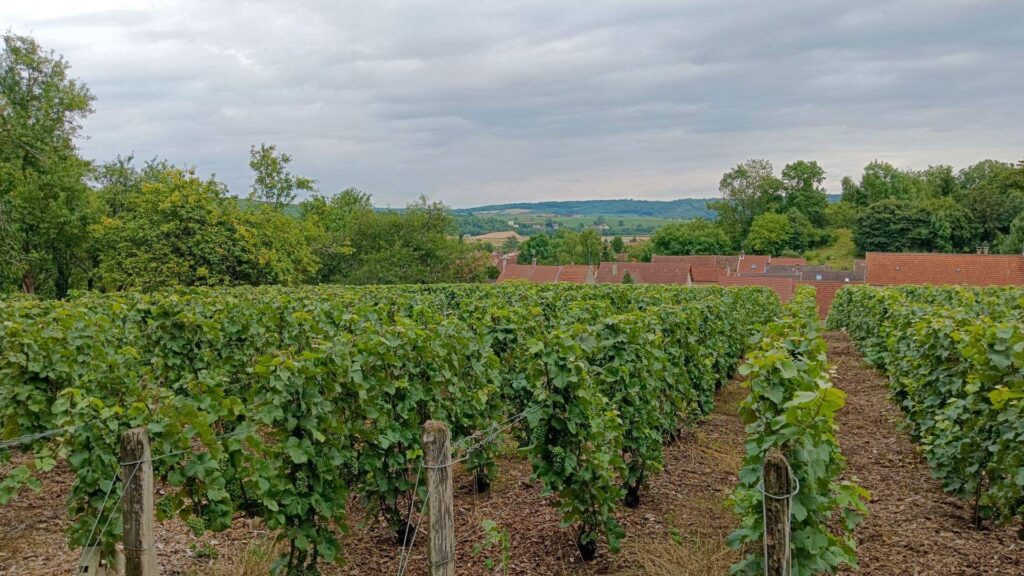
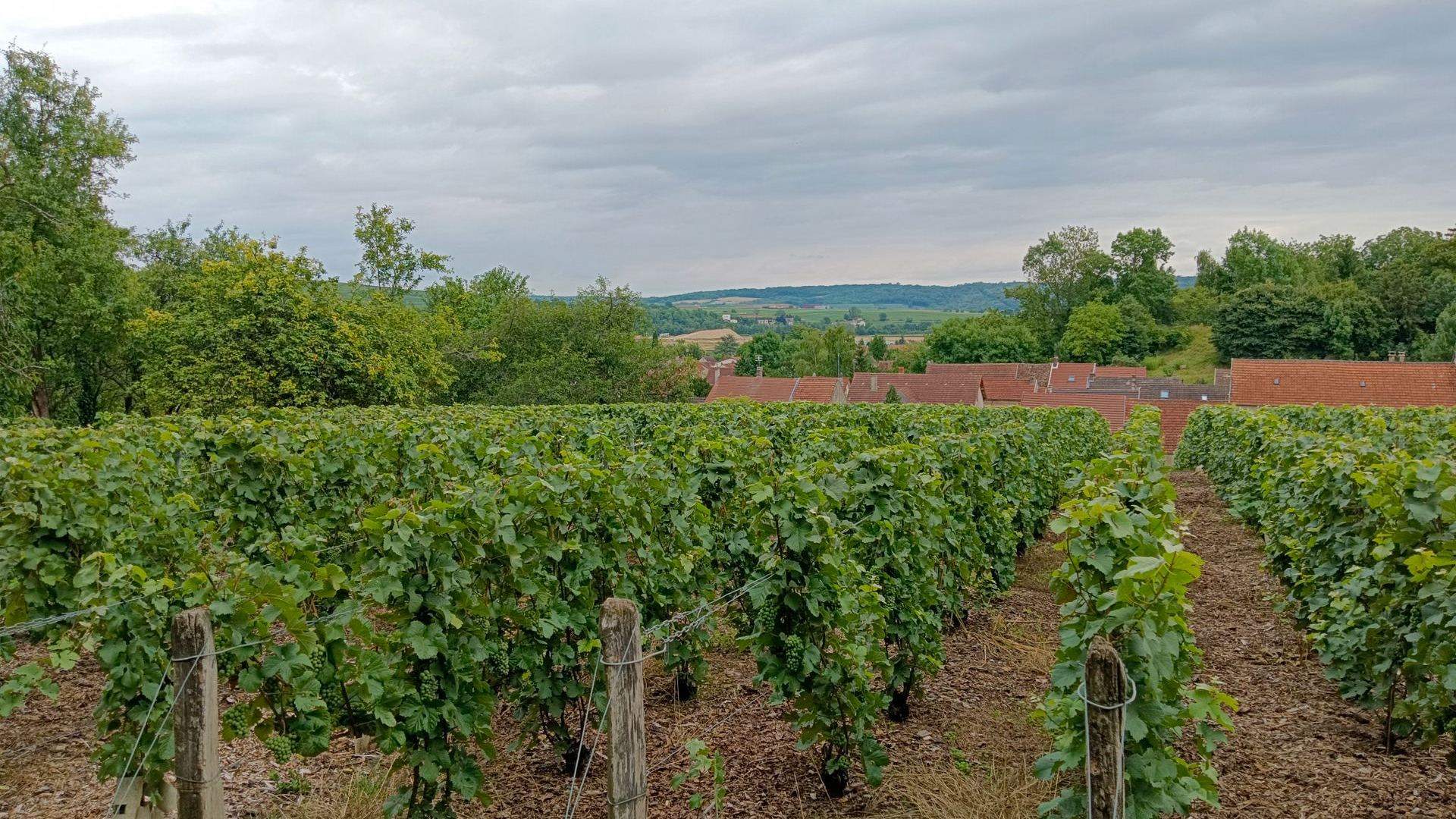
2026 was a wonderful summer in England, with long, warm and dry days. Many people asked whether the vines were stressed. They weren’t. Our most recent vineyards were planted in 2015, so after ten years their roots reach right down into the water table. There’s plenty of water in the ground for our vines to thrive.
From a quality perspective, it’s been a very good year, and the ripeness is wonderful. We started harvesting two weeks earlier than in 2025, which was already a week earlier than the previous record. That makes us three weeks earlier than 2024, which is quite extraordinary. When I joined Gusbourne, we’d begin around the last week or so of September. This year we started right at the end of August.
I was helping out in the winery on the Bank Holiday Monday. Our harvest interns come from all corners of the world to learn about winemaking in England, but they weren’t due to arrive until early September. The fruit was ripe and ready, so needed to come in, we all had to get involved.
The best way to sum up 2026 is the perfect balance between acid and sugar, particularly in the Pinot Noirs. Get that balance right and you make fantastic sparkling wine. There should be some really excellent still wines too.
“If you can get that balance right, you make fantastic sparkling wine.”
Leading with brand
Operating with a brand and consumer-first mindset is critical to a luxury business, alongside the absolutely essential high-quality product or service. My five years leading Gusbourne’s brand and marketing were the perfect grounding for becoming CEO.
I’m also the beneficiary of a forward-thinking board of directors. They chose me to transition from a winemaking-led business under our former CEO, Charlie Holland, who held the dual role of Chief Winemaker and Chief Executive. We’ll never lose sight of how important our product and our brand are to our business. Our wines are so well received because they taste and look fantastic. A real focus on brand and product quality is what has established Gusbourne’s reputation.
If you would like to feature in a future edition, please contact Hannah Blunt.
About the author
Ben Lilly is the founder of Giant Leap Digital, the London agency that connects luxury and financial brands with wealthy audiences through paid media, data and creative. He writes Luxury Leaders Edit, a fortnightly conversation with the people shaping luxury.
This interview first appeared in Luxury Leaders Edit on LinkedIn. Follow Ben on LinkedIn.
Contact Giant Leap Digital
Transform your digital performance.
If you are looking to unlock growth opportunities, please get in touch and tell us about your brand, goals and challenges. We will be in touch shortly.
Thank you!
Thank you for your enquiry. We will be in touch soon.
Insights