From Harper’s Bazaar to Walpole
Your background is in media rather than trade bodies. What led you to Walpole?
I worked for more than ten years at Harper’s Bazaar, Elle and Esquire, and really got to know the international luxury brands, particularly through Harper’s Bazaar. I also got to know extraordinary British luxury brands: whiskies, handmade shoes, tailoring and trench coats. I saw what we excelled at in this country, and how it appealed to a discerning, affluent connoisseur.
I had long felt luxury in the UK deserved a trade body with teeth that could support these brands and put them on the map. After about three years running my own content consultancy for luxury brands, I was approached for the job of Walpole’s CEO; we had just had the Brexit vote, and the world was about to get much more complicated for the UK’s luxury brands because they’re so integrated across Europe in supply chain, customers and talent, and I thought, that’s got my name written on it.
“We need a trade body with teeth that can really support these extraordinary brands and put them on the map.”
Nine years later, I’m still flying the flag for UK luxury as hard as ever. We run trade missions to the US and the Middle East. I sit on the board of the European Cultural and Creative Industries Alliance, which is how we work with the other European luxury associations on advocacy in the EU. Those laws affect UK luxury brands as much as European ones.
Every day is different. Just in the last week or so, I’ve been at the British Museum Ball, in Spain, speaking about why luxury is Europe’s competitive advantage, and this morning I was with Sir Mark Rowley, Commissioner of the Metropolitan Police, talking about a safer London for high-value international visitors. Everything I do comes down to a passionate determination that policymakers, and the world at large, understand the remarkable economic and cultural significance of British luxury.
A community built on a shared customer
Walpole was founded in 1992. What has held it together for 34 years?
Six managing directors of brands defined by British excellence founded Walpole, including Henry Poole, the Savoy, British Airways, Coutts, and DAKS Simpson. They thought: we’ve got the same business model and the same customer. If we get together for lunch every month or so, and I suspect they were long lunches, there’s pretty much no problem we can’t solve and no opportunity we can’t maximise.
That idea of close community and problem solving is the golden thread through all 34 years. Walpole is a little like a very niche CBI, in that it represents a broad range of brands and business sectors, but with one advantage: every member still shares the same customer and the same business model. That makes it much easier to convene around common issues and to advocate for them in government.
How do you support the next generation of brands?
Through Brands of Tomorrow, which turns 20 next year. Each year we take 12 emerging luxury brands, usually three to five years old, through a programme of mentoring, workshops and full immersion in the sector. It’s designed to help those brands get to their next level and create a new pipeline of growth and a new pipeline of jobs for the sector.
One of the first brands on the programme was Bremont. Their dream was to take on the Swiss watch giants and bring watchmaking home to the UK. They now have an entire manufacturing facility in Henley and a global business. That’s the power of the sector working together.
“Nobody succeeds alone.”
What makes British luxury different
Do people misunderstand what British luxury is?
It’s natural that French luxury should define our notion of what luxury is: it’s a massive global phenomenon with super brands like Dior, Chanel and Hermès. It’s haute couture and haute parfum and very feminine. But UK luxury is different. It’s much more masculine. It’s cars, whiskies, trench coats and bespoke tailoring or the private club and the pub. Think of Aston Martin, The Macallan, Church’s shoes and dunhill.
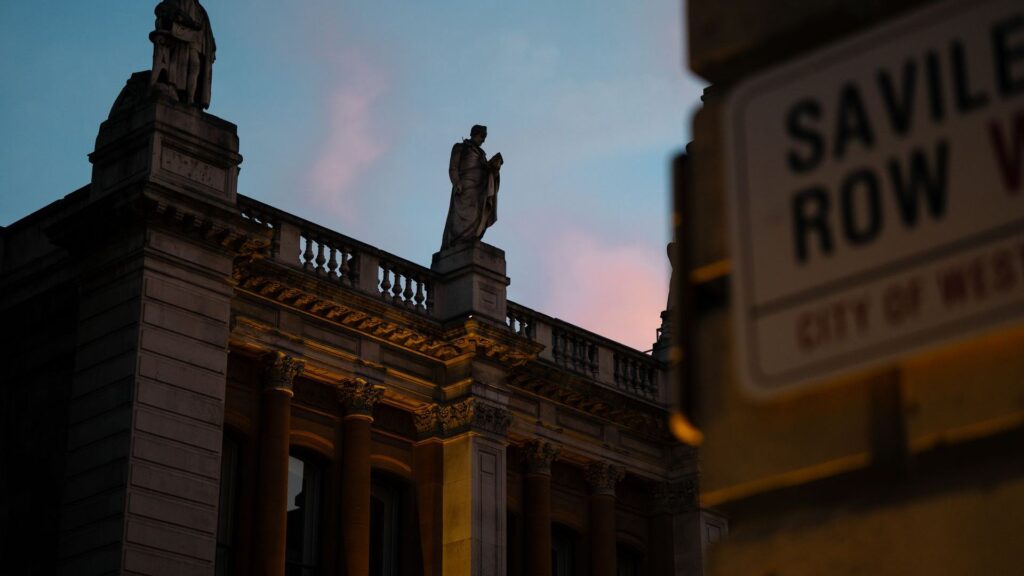
It’s also about a long history of invention: even something as iconic and global as the dinner jacket – and think of the ubiquity of black tie as a dress code – was invented right here on Savile Row by Henry Poole in 1865.
It’s also absolutely not the preserve of the elite: British luxury can be exclusive, but it’s never excluding. You might well be someone commissioning your own Rolls-Royce Phantom as we speak, or booking a suite at Gleneagles – but equally you might be buying a Jo Malone candle or a Smythson diary. For less than a fiver, you can go to the Biscuitorium at Fortnum & Mason and buy the most perfect biscuit, made that morning right there in Piccadilly.
So is luxury about price?
It’s not about the price; it’s about what it means to you: it’s the watch that said you made partner in your firm, or the weekend away when you proposed to your wife. Luxury is about people’s dreams.
“You are in a business of joy. To be holding somebody’s dream in your hands is a bit of a privilege, really.”
Why policymakers should take luxury seriously
Why should policymakers take luxury seriously?
Simply because luxury is the ultimate discretionary category; don’t mistake it for a frivolous business. Behind those beautiful products are nearly half a million jobs. The sector is worth £81 billion to the UK economy, which makes it bigger than the pharmaceutical industry. Around 70% of what it produces is exported, worth £56 billion, to the US, China, Japan, the Middle East and Europe.
That tells you the rest of the world sees British luxury as a UK competitive advantage. Let’s make sure it’s not taken for granted as an economic asset.
“As a sector, it’s worth £81 billion to the UK economy. That makes it bigger than the pharmaceutical industry.”
Luxury as a regional growth engine
You describe luxury as a regional growth engine. What does that look like?
Those jobs are in every part of the UK, from the Outer Hebrides to the West of Cornwall. Mulberry manufactures in Somerset. Sanderson Design Group makes its wallpaper in Lancashire. Johnstons of Elgin makes the world’s finest cashmere in Scotland, for its own brand and for many famous international houses – Burberry has made its scarves with Johnstons for more than a hundred years.
These businesses anchor whole communities. When I visited the Mulberry factory, I met four generations of the same family. If a site like that went, the community would hollow out completely.
Manufacturing here isn’t easy. Energy costs are around four times what they are across the Channel. Employing people has become more expensive, regulation adds cost, and since Brexit, the paperwork on imports and exports is a real burden. But our quality manufacturing is highly valued overseas and is powered by skilled, properly paid people nationwide. Our policy makers should value this as highly as our customers do.
What comes next for Walpole
What is Walpole doing next?
Next year we launch Luxury in the Making, a five-part campaign on the regional excellence of British luxury: Scotland, the North, the Midlands, the South and London. The early Scottish data already shows that luxury, broadly hospitality, textiles and whisky, is disproportionately important to Scottish GDP. The government talks about reindustrialisation. This sector is a champion of quality manufacturing, and we lose that at our peril. These are industries we should be unbelievably proud of. They’re a global calling card for brand Britain.
The British Luxury Awards take place on 9 November. What makes them special?
This year marks 25 years of the awards, always held in November at The Dorchester. They celebrate the growth and creativity of British brands. The big prize is British Luxury Brand of the Year. We take it down to a shortlist of four, and then the members vote. Your peers selecting you as the best brand in Britain is a priceless accolade. Last year’s winner was Gusbourne, the English Sparkling wine critics call the Krug of English wine. What I love is that 25 years ago, when the awards began, Gusbourne had only just planted its first vines. That win says everything about the excellence we can achieve in a short space of time.
Closing thought
What British luxury does is make people around the world love us. These are industries we should be unbelievably proud of, and I’m incredibly lucky to have the job of championing them.
If you would like to feature in a future edition, please contact Hannah Blunt.
About the author
Ben Lilly is the founder of Giant Leap Digital, the London agency that connects luxury and financial brands with wealthy audiences through paid media, data and creative. He writes Luxury Leaders Edit, a fortnightly conversation with the people shaping luxury.
This interview first appeared in Luxury Leaders Edit on LinkedIn. Follow Ben on LinkedIn.
Contact Giant Leap Digital
Transform your digital performance.
If you are looking to unlock growth opportunities, please get in touch and tell us about your brand, goals and challenges. We will be in touch shortly.
Thank you!
Thank you for your enquiry. We will be in touch soon.
Insights